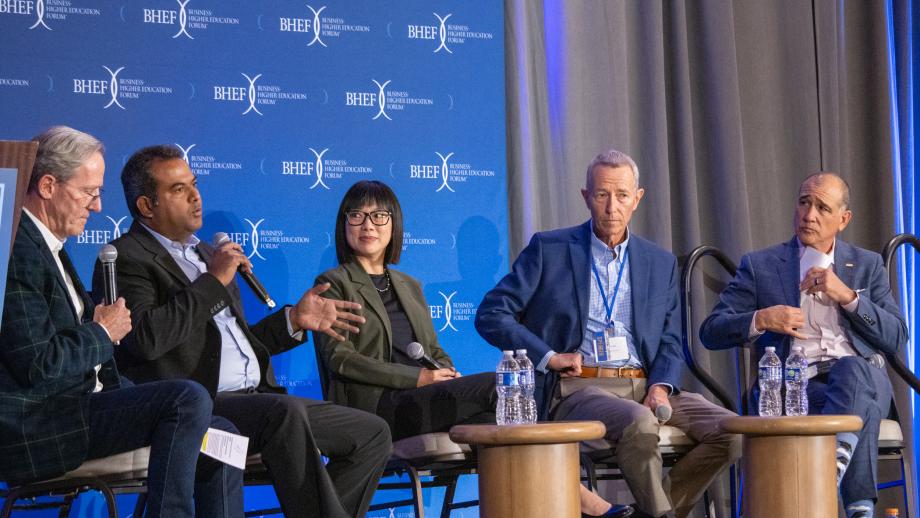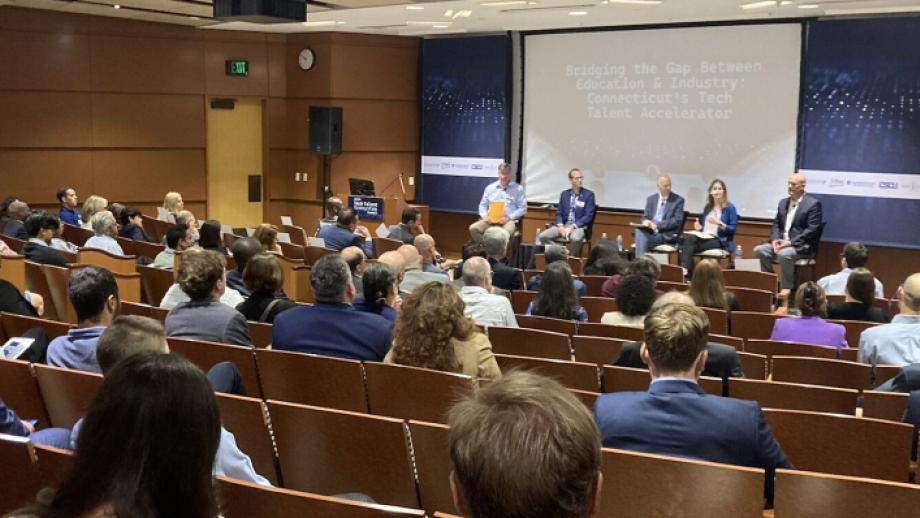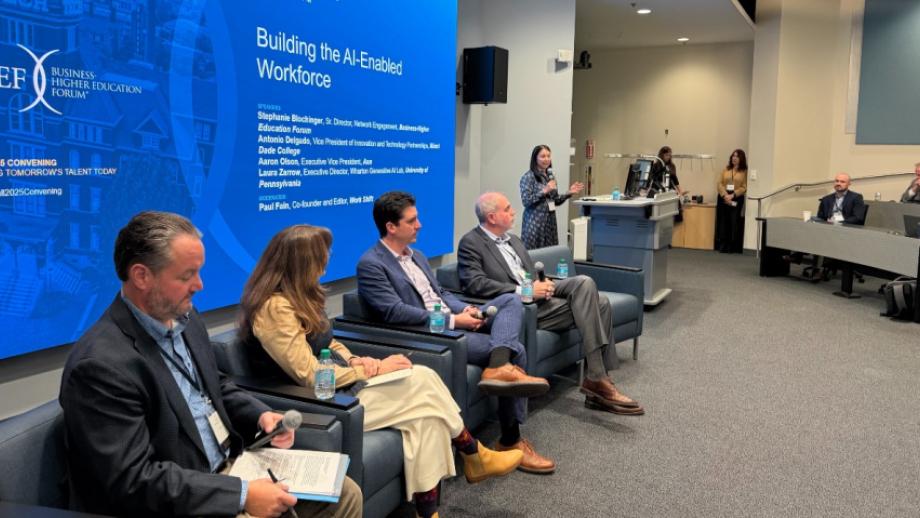

Business and higher education leaders agree: partnership is essential. Yet fewer than one in five higher education leaders report fully executing on a partnership strategy. The historic, siloed model, where institutions prepare learners at the start of their careers and employers provide jobs, no longer meets the demands of today’s dynamic workforce. The opportunity is clear but so is the complexity. Building meaningful partnerships requires navigating capacity, structure, competing priorities, and rethinking how both sides work together.
That’s why we created Industry Partnerships that Last: A Playbook for Higher Education, as a guide for higher education to build, structure, and sustain effective partnerships with business that drive talent solutions for learners, employers, and regional economies. Whether you're an institutional leader setting strategy, a VP coordinating alignment across departments, or a faculty member looking to embed work-integrated learning into programming, this resource meets you where you are. While designed for and with community colleges, this resource is broadly applicable across higher education.
What’s included:
- Strategies for building and sustaining high-impact business partnerships
- Case studies on best practices from institutions across the country
- User-friendly tools, templates, and resources for partnership engagement
- Role-specific guidance for institutional leaders, strategic leaders, and faculty/staff
If you work at a college or university, the first step to creating and sustaining partnership with industry is laying the groundwork to become a partner of choice:
1) Assess the Now
Before deepening partnerships, it helps to get a clear picture of where you already stand. That means bringing together people from across departments and roles to take stock of your institution's current culture, resources, structures, and existing partnerships, utilizing an assessment tool. Map existing relationships, identify gaps, and surface opportunities for deeper collaboration. Create space for honest feedback to get a clear picture of what’s working and what isn’t.
Want to get started? BHEF’s Industry Partnership Assessment helps leadership teams understand their institution’s capacity for partnership, identify opportunities for deeper collaboration and create an action plan for improvement according to the institution’s goals. To learn more about accessing and using the Industry Partnership Assessment, contact our team.
2) Empower Staff through Leadership Buy-In
Leadership buy-in is key for quick movement and creative solutions. It starts with top-down support within the institution for faculty and staff to have the autonomy to engage with industry and have the confidence to create solutions and test new ideas. The same is true on the employer side. Executive champions can accelerate progress and open doors. They don’t need to stay at the table forever, but they help drive action.
Dr. Fujii, President of Arapahoe Community College, prioritized employer partnerships as a key strategy for advancing economic mobility and workforce innovation. Her leadership commitment was demonstrated through direct involvement in partnership development, regular engagement with peer executives at potential employer partners, and empowering staff to make employer engagement a strategic priority. To strengthen coordination across the institution, ACC brought together its external-facing departments (including adult basic education, community education, upskilling, and apprenticeship) under a single workforce division. The college also established a Vice President of Economic Mobility and Workforce Innovation role to serve as a clear point of contact and lead partnership efforts across the institution. This top-down commitment helped embed partnership development as a core focus across the college.
3) Identify a Clear Point of Contact
Often, businesses don’t know how to navigate the structure and processes of higher education institutions. Many employers are eager to partner with higher education but aren't always sure how to get started. A clear, visible point of contact makes the path straightforward. Make your POC visible on your website and in outreach materials. That doesn't mean funneling everything through one person, it means making it clear who does what and how to reach them. Turnover happens on both sides of the table, so build in backup contacts.
The City University of New York (CUNY) tackled this challenge across their 25 colleges by launching an Industry Support Hub, a single entry point staffed with industry-specific specialists who direct businesses to the right campus, department, and faculty member, while using technology to maintain continuity across interactions. This also helps to lower the burden on faculty and staff members often tasked with seeking and fostering industry partnerships.
4) Develop a Solutions Oriented, “Yes-and” Mindset
Approach partnership with flexibility, openness, and a problem-solving lens. Reframe limitations into alternatives. Constraints are real and it is important to be transparent with industry partners about what’s feasible and what additional buy-in is needed from the employer to make an idea work.
When San Jacinto College was looking to meet the talent needs of the region's fast-growing petrochemical industry, their employer partners encouraged them to think bigger than the original facility design. Space on campus was limited, but rather than letting that be the end of the conversation, Chancellor Hellyer found a creative path forward: she sunset a golf course to repurpose campus land, making room for an expanded training facility. Employers invested in the center and deepened their partnerships in return, helping shape curriculum, collaborating on customized training, and actively recruiting talent from the college.
5) Meet Business Where They Are
When approaching partnership, communication and design should reflect the priorities and language of business, emphasizing outcomes, return on investment, and impact, rather than academic structure or internal processes.
Hudson County Community College exemplified this when they partnered with Eastern Millwork to launch a five-year registered apprenticeship program. Apprentices earn an associate degree at HCCC and a bachelor's degree at Thomas Edison State University while working at Eastern Millwork. Eastern Millwork expressed that they needed talent ready on day one. HCCC approached program decisions through the lens of the business value they would deliver. The college fast-tracked the program launch, stood up the first course while building the remainder of the program in parallel, and prioritized major-specific coursework so apprentices could begin developing job-relevant skills immediately, resulting in a quicker return on investment for Eastern Millwork.
6) Leverage Regional Networks and Third-Party Assistance
You don’t have to build partnerships alone. Regional intermediaries, workforce boards, chambers of commerce, and alumni networks can provide introductions, credibility, and additional capacity. Collaboration across institutions can also strengthen employer engagement and reduce duplication.
EY couldn't find enough talent to staff a new center in San Antonio, so they turned to trusted intermediaries through the Workforce Partnership Initiative Texas, including BHEF, the Business Roundtable and the Texas Business Leadership Council, to connect them with the right higher education partner. That introduction led to a partnership with Alamo Colleges District, with intermediaries helping navigate the relationship, build EY's brand awareness on campus, and support execution through marketing, campus visits, and faculty champions. The result was the EY-Alamo Colleges District Hiring Pilot, which led to the successful hiring of 91 Alamo graduates and marked the first time EY hired directly from a community college.
7) Market Yourself
Every institution brings something distinctive to the table. Your “secret sauce” might be embedding AI skills across every program, ensuring every learner gains a work-integrated learning experience, or serving a student population that reflects the region, where 90% of graduates stay and work locally.
In conversations with employers about partnership, lead with your differentiator and the outcomes you've already delivered. Highlight successful collaborations with industry. Be specific about the partnership opportunities you can provide. Make it easy for employers to see why your institution is the right partner to help them achieve their goals.
Charter Oak State College has a clear mission and learner focus: delivering affordable, accelerated online degree and certificate programs for adult and working learners. This made them a natural partner for Google and the state of CT to launch the Connecticut Online AI Academy, which offers CT residents one month of free training in generative AI, culminating in an industry-recognized credential.
Strong marketing, strategic partnerships, and COSC’s clear differentiator led to the program reaching its full-year sign-up goal in just three days. COSC has since been approached by multiple regional employers to deliver customized upskilling programs. By moving quickly, marketing, and aligning its offerings to its target learners, COSC is signaling itself to employers as a leader in AI training across CT.
Move from Strategy to Action
These seven strategies are all part of Industry Partnerships that Last. The playbook is designed to meet you where you are, whether you're just beginning to build a partnership culture or looking to strengthen relationships you’ve already established. There is no one-size-fits-all approach to partnership. The best practices shared here are intended to serve as examples and inspiration, not prescriptive models. Successful partnerships should be designed creatively and strategically to align with your institution’s specific goals, capacity, and community needs. To help you put these strategies into action, explore the accompanying tools and templates to assess your approach, shape your partnership strategy, and craft clear, compelling outreach that leads to meaningful conversations with employers.